AI Agents for Game Development: 77 Ready-to-Use Skills on GitHub
I recently came across an interesting open-source project called awesome-gamedev-agent-skills. It's a collection of skills for AI coding agents working with Unity, Godot, Unreal Engine, and other game engines. What I like about the idea is simple: instead…
 Oleksii Strokan2 min read
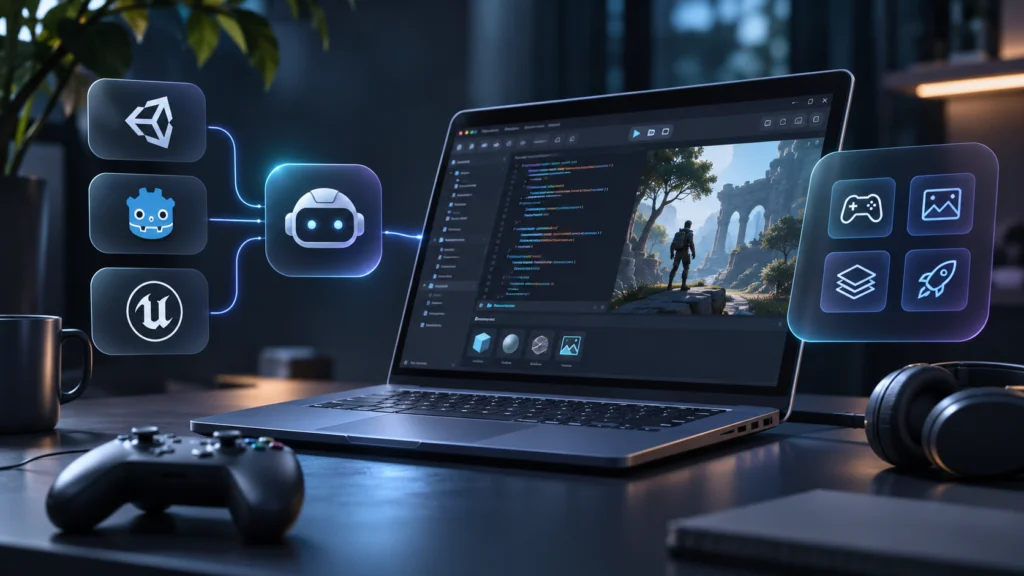
I recently came across an interesting open-source project called awesome-gamedev-agent-skills. It's a collection of skills for AI coding agents working with Unity, Godot, Unreal Engine, and other game engines.
What I like about the idea is simple: instead of repeatedly explaining engine-specific details to an agent, you can give it a set of specialized instructions.
What the Project Offers
At the time of writing, the repository includes 77 skills covering different areas of game development:
- Development: Unity, Godot, Unreal, Phaser, and other engines.
- Graphics and animation: Game assets, shaders, and animations.
- Game mechanics: Physics, character movement, and enemy AI.
- Optimization: Performance improvements and profiling.
- Publishing: Building and preparing games for release.
One of the most interesting features is automatic skill selection.
For example, if you ask an agent to implement a double jump in Godot, the system can identify the engine from the project files and select relevant skills for character movement and platformer mechanics.
This helps avoid loading an entire library of instructions into the agent's context.
How to Try It
The project supports Claude Code, Codex, Cursor, Gemini CLI, and other AI coding tools.
You can install the skills with:
npx skills add gamedev-skills/awesome-gamedev-agent-skills
Once installed, you can describe tasks in natural language, and the skill-routing system is designed to select the relevant instructions.
Why I Find This Interesting
Although I mainly work in web development, I like the architecture behind this approach.
Instead of maintaining one huge instruction file, the agent gets access to specialized knowledge when it's relevant to the task.
Of course, ready-made skills don't replace understanding the game engine or verifying the results. But they can reduce repetitive instructions and help avoid mistakes when working across different technologies.
For me, this is another good example of how modular knowledge can make AI agents more useful without making the overall system unnecessarily complex.