How Reliable AI Agents Work: Anthropic’s Engineering Approach
I recently came across a technical workshop by Anthropic engineers explaining how they built Claude Managed Agents. I find this topic interesting because when developing AI agents, you quickly realize that connecting a model to a set of…
 Oleksii Strokan2 min read
I recently came across a technical workshop by Anthropic engineers explaining how they built Claude Managed Agents.
I find this topic interesting because when developing AI agents, you quickly realize that connecting a model to a set of tools is relatively straightforward. The harder part is ensuring reliable execution, managing context, and recovering from errors.
What Anthropic's Engineers Cover
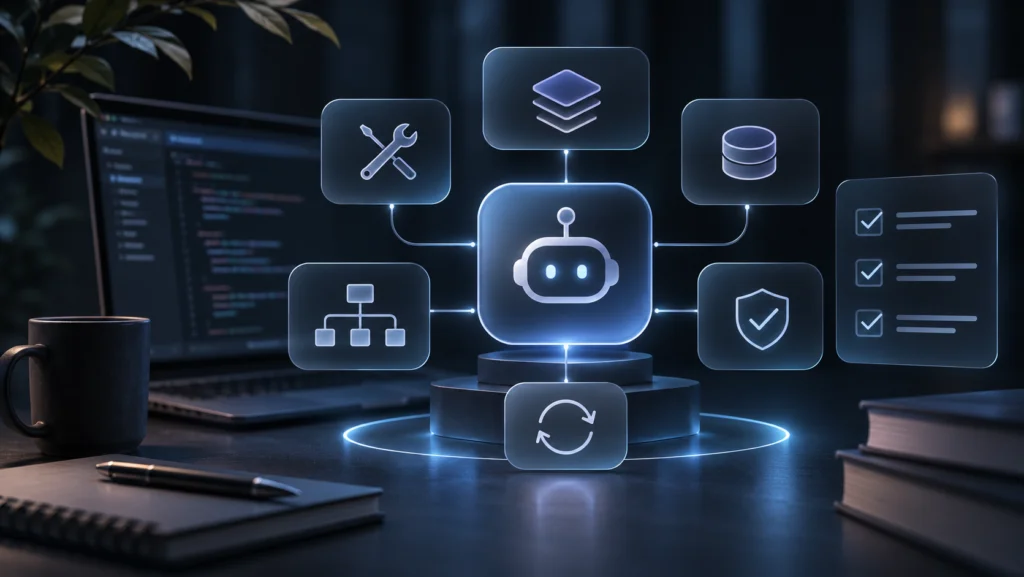
The workshop focuses on the architecture of an agent harness — the system that manages task execution around an AI model.
The main topics include:
- Agent loops: How to organize task execution, tool calls, and error handling.
- Skills and memory: How to give agents relevant knowledge and retain useful experience.
- Context management: When to compact session history without losing important information.
- Multi-agent orchestration: When it makes sense to divide work between multiple agents.
- Result verification: How to evaluate actual task completion instead of relying only on the model's responses.
Another interesting topic is Agent Dreaming, a mechanism for reviewing previous sessions and updating an agent's memory. At the time of publication, Anthropic described it as a research feature.
What Stood Out to Me
One important principle is that an agent's architecture shouldn't remain unchanged as AI models improve.
Anthropic shares an example: with one version of Claude, additional context resets helped prevent agents from stopping tasks too early. With the next model version, that problem disappeared, and the mechanism became unnecessary complexity.
It's a good reminder that not every safeguard needs to stay in place forever.
Why This Matters
For me, the reliability of an AI agent isn't determined by how many tools or subagents it has.
What matters more is how consistently the system completes tasks, maintains state, handles errors, and makes its results verifiable.
A good agent architecture shouldn't just compensate for a model's limitations. It should also remove unnecessary complexity as those limitations disappear.