How to Automate Sound Design for Videos with AI
AI tools are getting pretty good at creating animations, but sound design is still a challenge. Even a visually impressive video can feel wrong when the music doesn't match the movement, sound effects seem out of place, or…
 Oleksii Strokan2 min read
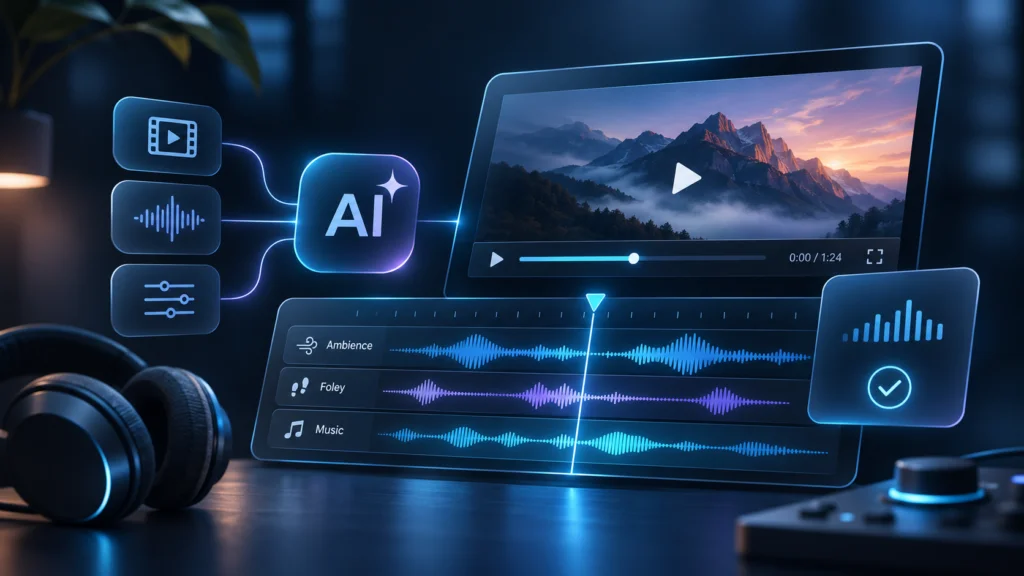
AI tools are getting pretty good at creating animations, but sound design is still a challenge. Even a visually impressive video can feel wrong when the music doesn't match the movement, sound effects seem out of place, or volume levels are inconsistent.
I've been looking into how this process can be automated without relying entirely on AI's subjective judgment.
Synchronizing Sound and Animation
The main challenge is matching visual events to the music.
One useful tool is librosa, a Python library for audio analysis. It can detect tempo and beats, making it possible to synchronize transitions, animations, and other visual events with the soundtrack.
But automatic beat detection isn't always accurate. The results still need to be checked rather than blindly trusting the algorithm.
Sound Effects and Volume Control
Instead of generating random sounds, I'd prefer working with a curated library of sound effects:
- Whooshes — for fast movements and transitions.
- Pops and impacts — for appearing elements and visual accents.
- Clicks — for interactions with user interfaces.
Audio mixing is another important part. Music shouldn't overpower speech, and sound effects shouldn't suddenly jump in volume.
For automated checks, FFmpeg provides tools like ebur128 and loudnorm to measure and normalize loudness according to the requirements of the final output.
It's also worth checking the exported video itself, since encoding can affect audio levels.
Automation Still Needs Verification
I think a good workflow should combine automated analysis, clear technical constraints, and final verification.
AI can help select sound effects, position them on the timeline, and prepare an audio mix. But technically correct synchronization doesn't always mean the video actually sounds good.
The goal isn't to replace sound design entirely. It's to reduce repetitive work and make the results more consistent and predictable.